Percutaneous neuromodulation
Safe electrical stimulation to relieve pain, improve neuromuscular function and speed up recovery.
What is Percutaneous Neuromodulation?
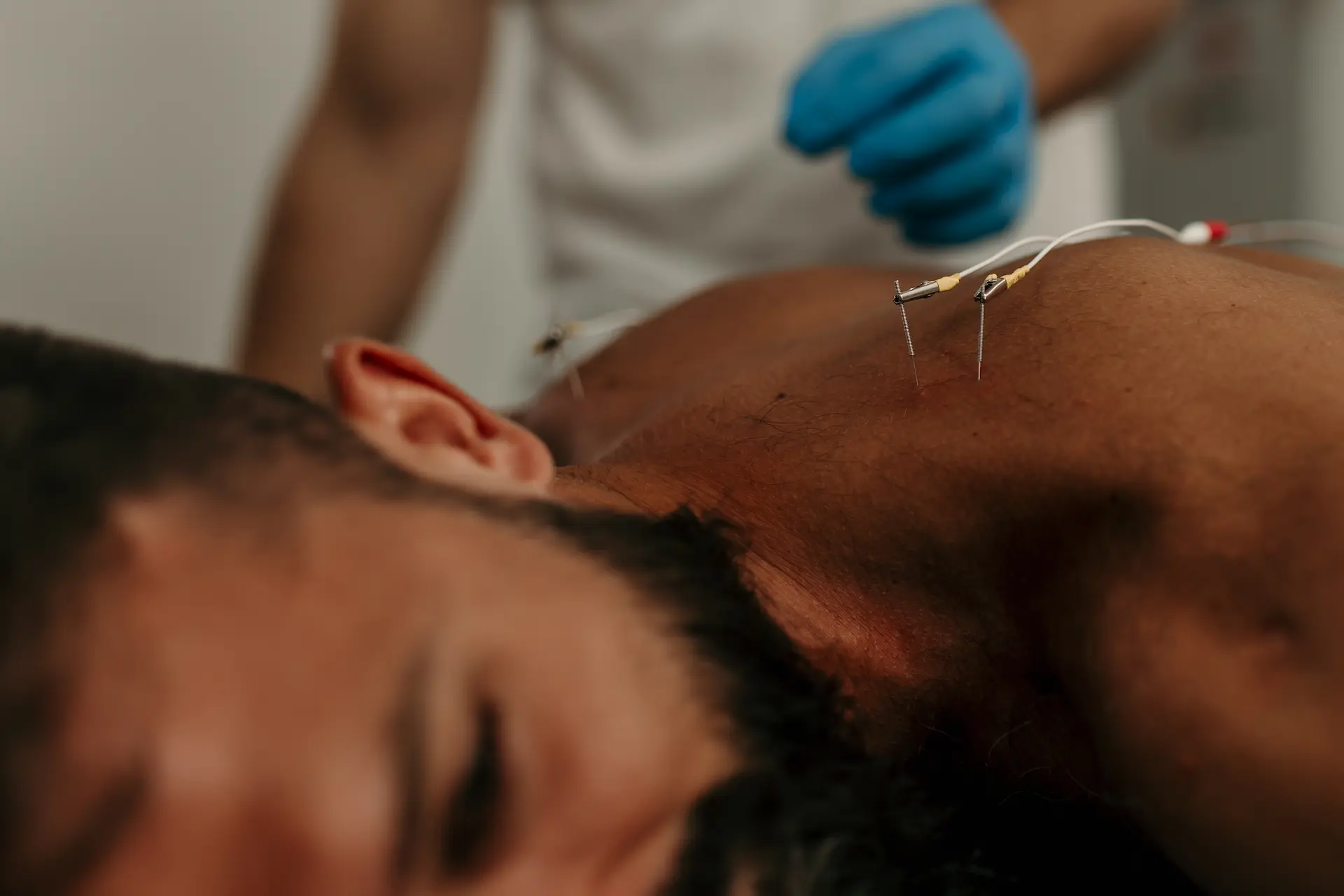
It consists of inserting a needle near an affected nerve or muscle, through which a low-frequency electrical current is applied, controlled by a device.
Percutaneous neuromodulation helps reduce pain and improve neuromuscular communication, promoting functional recovery and wellbeing.
The goal is to stimulate the peripheral or central nervous system to improve neuromuscular communication, reduce pain, normalize muscle electrical activity, and promote functional recovery.
When can I benefit from Percutaneous Neuromodulation?
Percutaneous neuromodulation is used in a wide variety of musculoskeletal and neurological conditions, including:
- Chronic or acute pain – of muscular, articular, or neuropathic origin.
- Myofascial pain syndrome – relief of trigger points and muscle contractures.
- Tendinopathies and sports injuries – treatment of overloads and functional improvement.
- Radiculopathies or neuralgias – e.g., sciatic or pudendal nerve.
- Paresis or muscle weakness – after nerve injuries or surgical interventions.
- Spasticity and altered muscle tone – in neurological patients (stroke, multiple sclerosis, cerebral palsy, etc.).
Are there any contraindications?
This procedure is contraindicated in patients with pacemakers or implanted defibrillators. In metal allergies, especially to nickel, standard acupuncture needles cannot be used. Pregnancy is not a contraindication, but if you are pregnant, you should inform us. Patients on anticoagulants are more prone to bleeding, as are immunocompromised or lymphadenectomized patients to infections. In hypothyroidism, edema may occur in the punctured muscle, and needling should be avoided in skin conditions such as psoriasis.
Are there any side effects?
The use of needles in percutaneous electrical stimulation can cause effects similar to other needling techniques. These include: local or nearby discomfort that disappears over time, dizziness in sensitive individuals, though without serious risk, infrequent side effects such as dermatitis, bruising, spasms, myoedema or infections (it is recommended to wait 24 hours before swimming), and possible “cramp” sensation when puncturing near a nerve...
Additionally, electrical stimulation may cause mild skin irritation and mild pain in the treated area or along the nerve path.
You can now book your physiotherapy appointment in advance
Choose a day and time online or, if you prefer, give us a call.
Discover Other Physiotherapy Services Available at Our Center
Physiotherapy and Rehabilitation
Personalized treatments to relieve pain and improve your mobility.
Pelvic Floor Rehabilitation
Prevention and treatment of pelvic dysfunctions in both women and men.
Dry Needling
Advanced techniques to relieve muscle pain and improve neuromuscular function.
Frequently asked questions
What is percutaneous neuromodulation?
It is a technique in which a needle is inserted near the affected nerve or muscle and a controlled low-frequency electrical current is applied through it. Its goal is to reduce pain and improve communication between nerve and muscle.
How is it different from dry needling?
In dry needling the needle acts directly on the muscle's trigger point, without current. In percutaneous neuromodulation the needle is placed near the nerve and an electrical current is applied to stimulate the nervous system.
What conditions is it used for?
Acute or chronic pain of muscular, joint or neuropathic origin, myofascial pain, tendinopathies and sports injuries, radiculopathies or neuralgias (such as sciatica), muscle weakness after nerve injuries, and spasticity in neurological patients.
Who cannot have percutaneous neuromodulation?
It is contraindicated for people with an implanted pacemaker or defibrillator and in case of metal allergy. Caution is needed with anticoagulants, a weakened immune system, hypothyroidism or skin conditions such as psoriasis. If you are pregnant, you should let us know.
Does it have side effects?
There may be temporary local soreness, a cramp-like sensation when the nerve is stimulated or, in sensitive people, some dizziness with no serious risk. We recommend not swimming in pools for the following 24 hours.